



The Evil Eye and the Hamsa Hand are two of the best-known protection symbols in the world. You often see them together on the same bracelet or wall hanging, so people naturally think they mean the same thing. They don't. The Evil Eye is a single blue eye, mostly linked to keeping envy away, while the Hamsa is an open palm linked to a wider mix of blessings, luck, and peace.
If you're trying to decide which one to wear, this guide walks you through what each symbol means, where each one comes from, how they differ, and how to pick the one that feels right for you.
Evil Eye vs Hamsa: Key Differences
Here is a simple comparison to help you clearly understand how both symbols are different yet meaningful in their own way.
|
Aspect |
Evil Eye |
Hamsa Hand |
| Shape and Design |
Eye-shaped symbol, usually in blue |
Hand-shaped symbol, often with an eye in the center |
| Meaning |
Associated with deflecting envy and unwanted attention |
Associated with protection, peace, and blessings |
| Cultural Roots |
Found across Mediterranean folklore, Middle Eastern, South Asian, and Balkan cultures. |
Rooted in Middle Eastern and North African traditions |
| Usage Style |
Mostly used in small jewelry pieces like bracelets and necklaces |
Used in both jewelry and home decor |
| Symbolic Scope |
More focused and specific in meaning |
Broader and more holistic in symbolism |
| Design variation |
Usually stays consistent in look (blue eye dominant) |
Comes in many artistic styles, patterns, and variations |
| Symbol combination |
Usually, a standalone symbol |
Often includes the evil eye inside the hand design |
The easiest way to remember it: the Evil Eye is about blocking one thing - a jealous or admiring look - while the Hamsa is about welcoming a wider mix of good things like blessings, harmony, and safety.
The two also differ in shape and use. The Evil Eye is a small eye symbol you'll usually spot on jewelry. The Hamsa is a hand shape that works just as well hanging on a wall as it does on a chain. And here's the part that confuses people most: a Hamsa often has an eye tucked into its palm, which is why the two are so easy to mix up.
What Is the Evil Eye?
The evil eye is an old belief that a look full of envy or too much admiration can bring someone bad luck. In India this idea is often called Nazar or Drishti, and you'll find similar beliefs across Turkey, Greece, and the wider Middle East.
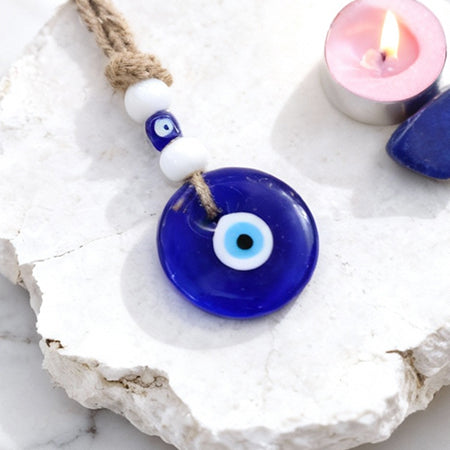
To guard against that gaze, people wear a matching charm — also called the Evil Eye — usually shaped like a blue eye. In Turkey it's known as the Nazar Boncuk. The charm is believed to catch the negative look before it reaches you and send that energy back.
You'll find this symbol on bracelets, necklaces, anklets, rings, keychains, and even printed on clothes. It has grown from a simple traditional charm into an everyday fashion piece that still holds its meaning. If you want the full backstory, our guide on what the evil eye means explains it in detail.
What Is the Hamsa Hand?
The Hamsa Hand is an open-palm symbol believed to protect the wearer from harm and bad energy, including the Evil Eye itself. The word hamsa comes from the word for "five," which points to the five fingers of the hand.
Across different faiths it goes by different names. In Islam it's often called the Hand of Fatima, in Judaism the Hand of Miriam, and in some Christian traditions the Hand of Mary. The names change, but the main idea stays close: protection along with blessings and good luck.
Because it's a bigger, bolder shape, the Hamsa is popular both as jewelry and as a decor piece for the home. Many designs put an eye at the center of the palm, bringing two protective ideas into one. You can read more in our guide on the Hamsa Hand and Evil Eye symbol.
What the Two Symbols Share
Even with their differences, the Evil Eye and the Hamsa share a few things:
- A protective purpose. Both are worn in the belief that they keep bad energy and envy away.
- A long history. Each has been used for a very long time across many places.
- A double life as jewelry and meaning. People wear both for the look as much as for what they stand for.
- A shared design. The Hamsa often has an Evil Eye in its palm, so the two frequently come as one piece.
These common threads are exactly why they pair so naturally.
Can You Wear the Evil Eye and Hamsa Together?
Yes - and many people do. Since a Hamsa often already has an eye in it, the two go together well. Wearing both simply layers their meanings and gives your look a little more depth.
Here's what usually happens when you combine them:
- One piece leads, the other supports. Most of the time the Hamsa is the main piece - a bigger pendant or charm - while the Evil Eye is the smaller detail, or the other way around.
- Your look becomes more expressive. Two symbols move the look away from plain and toward something more styled and put-together.
- Simple outfits show them off best. Against clean, neutral clothes, the pieces stand out instead of fighting with busy patterns.
Which One Should You Choose?
There's no "better" symbol here - the right pick comes down to what appeals to you.
- Choose the Evil Eye if you want something small, focused, and easy to wear every day.
- Choose the Hamsa if you're drawn to a symbol with a wider meaning and a design that also looks good in your home.
- Choose both if you enjoy layering pieces that carry personal meaning.
Think about where you'll wear it, the style you like, and which idea speaks to you more. That's really all it takes to decide.
Where to Buy Evil Eye and Hamsa Jewelry?
If you're ready to find your piece, the Astroyogi Store has Evil Eye and Hamsa-inspired bracelets, pendants, anklets, and hangings made for everyday wear. Whether you want one charm that stands out or a set you can layer, there are options to fit different tastes - all made with care and backed by Astroyogi's 25+ years of trusted experience, with every purchase supporting the Karma & Destiny initiative.
Frequently Asked Questions
1.) Which is more powerful, the Evil Eye or the Hamsa Hand?
Neither is stronger than the other. The Evil Eye is seen as a focused charm against envy, while the Hamsa stands for wider balance and blessings. The better pick is simply the one that feels more special to you.
2.) Does the Hamsa Hand always contain an Evil Eye?
Not always, but many do. A lot of Hamsa designs put an eye in the center of the palm to bring both protective ideas into one piece. You'll also find plain Hamsa designs with no eye.
3.) Can I wear these symbols every day?
Yes. Both are commonly made into bracelets, necklaces, and rings meant for daily wear. They're easy to mix and match with different outfits, which is a big reason people love them.


