



Think about your first evening in a new flat. There are boxes everywhere, the kitchen still feels unfamiliar, and then you light one agarbatti near the window. Slowly, that familiar fragrance fills the room. Somehow, the place begins to feel like home.
In this guide, you’ll explore why incense has been part of Indian homes for generations, the benefits linked with burning incense sticks daily for your mind, home, and daily practice, the difference between dhoop and agarbatti, and easy ways to burn incense safely in a small space.
Why Incense Has Always Been Part of Indian Homes?
Incense is fragrance carried through fire, which helps explain its place in worship. In Hindu puja, dhupa is a recognized offering, alongside other sacred things such as flowers, lamps, and food. At home, its role can be even important: it marks a shift from an ordinary moment to one you want to treat with attention.
-
An offering: Fragrance and fire have long had a place in worship. Cultural puja systems include dhupa as an offering to the deity. Texts describe pañcopachara puja (पञ्चोपचार, the five elements used during puja), which includes sandalwood paste, flowers, dhoop, deep (lamp), and naivedya (bhog).
-
Sign to Begin: Lighting incense before aarti, prayer, study, or quiet time gives the moment a clear beginning. It works much like a bell that tells you, “Now we begin.”
-
Quick reminder: When you use the same fragrance regularly, your mind can begin to associate that smell with a familiar activity. This is one reason a particular sandalwood or mogra scent can instantly remind you of home.
-
Linked to Air: Indian thought also connects fragrance and movement with vayu, the air element. The idea fits the experience of fragrance spreading through a room.
Incense Stick Benefits for the Mind and Mood
Incense can become part of everyday moments that call for calm, focus, or a change of pace. The fragrance, familiar routine, and an act of lighting a stick can help create a more intentional atmosphere around different parts of the day.
1. A calmer mind after a long day
Coming home after a busy day can make it difficult to switch off immediately. A familiar fragrance such as sandalwood or lavender can make the room feel calmer and help you shift your attention away from work. Try lighting one after you put your bag away, before reaching for your phone.
2. Easier focus for study or meditation
A burning incense stick can give a study session or meditation a natural time boundary. Light sandalwood or loban when you begin, settle into your practice, and use the end of the burn as a reminder to pause. It does not replace concentration, but having a clear start and finish can make the session easier to follow.
3. A gentler wind-down at night
If evening fragrances help you relax, try lavender or mogra about an hour before bed rather than lighting incense when you are already under the covers. This gives the fragrance time to settle while allowing the smoke to clear. For this routine, you can try these lavender and mogra incense sticks.
 Buy Now: Lavender & Mogra Incense Sticks
Incense Stick Benefits for the Home
The fragrance can also serve practical purposes, helping freshen a room and shape its atmosphere. Depending on the ingredients and how it is used, it can also become a habit of everyday household routines, from after cooking to early evenings.
4. Resets a stale or heavy room
After cooking, especially with strong spices, a room can hold onto smells for hours. Sambrani or loban dhoop can add a deeper fragrance that changes the room's scent after cooking or cleaning. Try sambrani dhoop cups in a suitable heat-safe holder with some ventilation.
 Buy Now: Sambrani Cups
5. Helps keep insects away at dusk
Some incense and dhoop products use ingredients such as citronella or neem that are commonly chosen for their insect-deterring properties. If you use one, place it near a balcony or window in the early evening and follow the product directions. Think of it as an extra measure, not a guaranteed way to keep every mosquito away.
Incense Stick Benefits for Your Daily Practice
Incense has long been used alongside everyday practices and rituals in many Indian homes. Today, it can remain a way to create a sense of consistency around prayer, reflection, meditation, or other quiet moments in the day.
6. Completes the puja ritual
In many Hindu worship traditions, dhupa is offered during puja along with other items. The exact sequence and offerings vary by tradition and ceremony, so there is no single setup for every home. If you are building your mandir from scratch, this complete puja samagri list can help you understand the usual items.
7. A two-second ritual you will actually keep
Some habits sound simple but are hard to maintain, like a twenty-minute meditation or a daily gratitude journal. Lighting one incense stick at the same time each day is much easier to repeat. The scent becomes a signal, helping you build the habit over time.
The benefits are much the same whether you use sticks, cones, or cups; the main difference is how long they burn and how much smoke they produce.
Dhoop vs Agarbatti: Which One Should You Use?
Agarbatti and dhoop are often treated as the same, but they differ in form. Agarbatti usually has a bamboo core, while dhoop is often bambooless and comes as cones, logs, or cups. The right choice depends on your space, scent preference, and available time.
| Feature |
Agarbatti |
Dhoop |
| Made of | Fragrance paste on a bamboo core |
Pressed resin, herbs, or other aromatic materials, usually without bamboo |
| Burn time | Often around 30 to 45 minutes |
Around 20 minutes for some cups, while larger logs can burn longer. |
| Smoke |
Usually lighter |
Usually denser |
| Best for | Daily puja, study areas, and small spaces |
Kitchen resets, evening use, and larger or special puja routines |
| Scent strength | Usually gentler |
Often stronger and longer-lasting |
| Needs |
An incense stand made of wood, stainless steel, clay, or brass |
A fire-safe holder or plate |
Astroyogi Tip: Bambooless options can offer a different burn profile, but no incense should be assumed to be smoke-free. In a small flat, agarbatti may suit a short weekday ritual, while a dhoop cup can be a practical choice after weekend cleaning.
How to Burn Incense Safely in a Small Home?
Incense involves both heat and smoke, so a little care makes the ritual more comfortable. You do not need a complicated setup. Think of it the same way you would think about using a diya: give the flame a stable place, keep combustible items away, and make sure the room has enough airflow.
-
Let the air move: Crack open a window or door while the incense burns. Good ventilation helps prevent smoke and particles from building up indoors.
-
Use less in small rooms: One stick is generally enough for a compact room. If your AC is running, allow some fresh air into the room rather than keeping it completely closed while incense burns.
-
Choose a stable holder: Place the incense in a heat-safe stand or holder over a plate that can catch ash. Keep it away from curtains, books, bedding, and the edge of your mandir.
-
Be considerate of sensitive people: If someone in your home has asthma, reacts to fragrance, or finds smoke irritating, burn incense farther away and allow the room to air out. Fragrances can affect sensitive people differently.
-
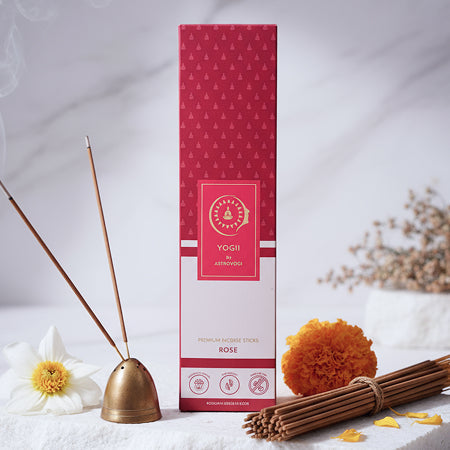
Choose your ingredients thoughtfully: If you prefer a gentler fragrance, look for products made with clearly listed ingredients and avoid anything whose scent feels overpowering. For example, these natural sandalwood, lavender, and rose incense sticks offer three familiar fragrance profiles.
Important Tip: Light the tip, let the flame catch briefly, then gently blow it out. You want a glowing ember and a steady stream of fragrance, not an open flame.
Where to Buy Natural Incense Sticks and Dhoop?
The fragrance you remember from a puja room comes from the ingredients, the blend, and the way it is prepared. That is why choosing incense thoughtfully matters.
With more than 25 years of experience in astrology and spiritual traditions, Astroyogi Store brings together incense and puja essentials with care. Our Karma & Destiny Initiative also directs a portion of purchases toward children's education. Make your purchase meaningful when you are ready.
FAQs
1.) Which incense is best for the puja room?
Sandalwood is a traditional choice for many Indian puja settings because of its familiar woody fragrance. Rose and mogra are also used in devotional settings, while loban and sambrani are common in some regional practices. The best choice is one that suits your family tradition and feels natural in your mandir.
2.) Is it okay to burn incense every day?
Yes, daily use can be part of a regular home ritual, provided you keep the room ventilated and use an appropriate amount. If the smoke makes your eyes or throat uncomfortable, stop burning it in that space and choose a lighter option or a better-ventilated area.
3.) Can I light incense with the AC on?
You can, but it is better not to burn incense in a tightly closed, air-conditioned room. Open a window or door for some fresh air while it burns. Once the smoke has cleared, you can close the room and run the AC as usual.
4.) What is the difference between incense and camphor?
Camphor is commonly used during aarti and burns quickly with a bright flame, while incense is designed to smolder gradually and release fragrance over a longer period. In many homes, incense is offered during the puja and camphor is used toward the end of the aarti.
5.) Which direction should incense be placed in the puja room?
There is no single placement rule followed by every Hindu household. Some Vastu traditions connect the southeast with the fire element and recommend placing fire-related items there. Whatever tradition you follow, keep the incense stable, away from fabrics, and positioned so ash cannot fall onto the deity or offerings.
6.) Can I use incense to cleanse crystals or rudraksha?
Some modern spiritual practices use incense or dhoop smoke as a symbolic way to refresh crystals, malas, or rudraksha. If you follow this practice, pass the item briefly through the smoke rather than holding it close to the burning material. There is no need to treat this as a substitute for physical cleaning or care.


