









Many Indian homes quietly follow protection traditions that are rarely explained. A black thread tied on a newborn’s wrist by an elder or an evil eye charm worn by an adult, are both believed to protect against buri nazar, or negative energy. However, they come from different cultural and spiritual systems, which often creates confusion about their purpose.
The evil eye charm and the kala dhaga are not the same. Each belongs to a distinct tradition and carries its own set of beliefs about protection and well-being. While both are worn for safety and positive energy, the way they are understood and used differs across cultures.
Despite this difference, many people in India wear both without knowing their specific meanings. This overlap shows how traditions blend in everyday life, even when their origins are separate.
In reality, they are not competitors but complementary symbols. Understanding their purpose helps you decide what to wear and when, with clarity and intention.
Evil Eye Charms vs Kala Dhaga (Black Thread)
Evil eye and kala dora are both protection charms, but let’s address their different energies and why they often work best together rather than as replacements for each other.
| Aspect |
Evil Eye Charm (Nazarbattu) |
Black Thread (Kala Dhaga) |
| Tradition |
Mediterranean and Middle Eastern beliefs, widely adopted in India |
Vedic Hindu astrology tradition. Majorly followed by Indians. |
| Main purpose |
Protects from jealousy, ill intentions, and negative energy |
Protects from planetary imbalance and negative energy. |
| Astrological link |
General protection, not planet-specific |
Strongly linked to Saturn (Shani), Rahu, and Ketu |
| Common form |
Blue bead charm or jewellery. (Now also available in different colors & types) |
Simple black cotton or silk thread |
| Where worn |
Wrist, neck, or used accessories like Bracelet, Ring, Pendant, Anklet |
Wrist, ankle, neck, or waist, arms, often hidden |
| Best use |
Daily protection in public life |
Spiritual and astrological protection, especially during difficult phases |
What Is The Evil Eye Charm?
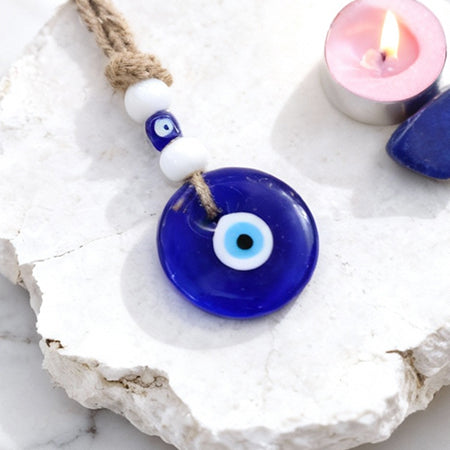
The evil eye charm is a protective symbol found in many cultures, especially around the Mediterranean region. The most familiar version is a blue glass bead, often worn as a bracelet or pendant. Here is the simple way to understand it:
-
Core belief: Envy or negative intentions from others are thought to generate an unseen, harmful energy that can affect a person.
-
Role of the evil eye charm: It is believed to absorb or block this negative energy before it reaches or impacts the wearer.
-
Modern usage in India: The charm is widely worn today as both a spiritual symbol and a fashion accessory.
-
Everyday significance: People wear it daily not only for protection beliefs but also as a reminder to stay positive and guarded against negativity.
-
Sign of breaking or falling off: If the charm breaks or falls, it is commonly believed to have absorbed negative energy and fulfilled its protective purpose.
Fascinating? You can explore a detailed explanation of the evil eye meaning & benefits in our other blogs. Let’s now understand what the black thread is and its astrological significance.
What Is The Kala Dhaga (Black Thread)?
The kala dhaga, also called kala dora in some regions, is a black thread tied around the wrist, ankle, or sometimes the waist. It is deeply rooted in Indian spiritual tradition and Vedic astrology.
Origin In Vedic Astrology
In astrology, black color is linked with Saturn, known as Shani. Saturn is considered a strict planet that teaches discipline through life challenges. The black thread is believed to help reduce the difficult effects of Saturn, especially during periods like Sade Sati or Dhaiya. It is also associated with Rahu and Ketu, which are linked to sudden changes and confusion.
How Does It Work?
Black is thought to absorb negative energy. Because of this, the kala dhaga is worn as a protective shield against buri nazar, stress, and unseen energetic imbalance. Many families also believe it protects children from sudden illness or discomfort caused by negative influence.
Kala dhaga is often tied by an elder in the family, usually by chanting a mantra like “Om Sham Shanicharaya Namah,” especially on Saturdays.
Who Should It Be Worn By?
-
Newborn babies and young children
-
People going through Saturn-related challenges (Shani Sade Sati/Dahiya, etc.)
-
Individuals facing major life changes
-
Those who prefer simple, non-visible protection
Unlike decorative jewelry, the kala dhaga is usually plain and meant to stay unnoticed while constantly offering protection.
Differences Between Evil Eye and Kala Dhaga
While both are believed to shield individuals from negative energies, they originate from different belief systems and are used in different ways. Understanding their differences helps clarify how cultural practices shape ideas of protection and well-being.
1. Cultural Origins:
-
Evil Eye: Comes from Mediterranean, Middle Eastern, and later global traditions focused on protection from jealousy and envy.
-
Kala Dhaga: Originates from Indian Vedic astrology and Hindu household practices passed down through generations.
2. Purposes They Serve:
-
Evil Eye: Protects against negative human emotions like jealousy, envy, and ill intentions from others.
-
Kala Dhaga: Along with the negative human emotions, this thread is believed to protect against planetary influences, especially Saturn, and karmic or astrological effects.
3. Visibility and Styles:
-
Evil Eye: Often designed as decorative jewellery, hanging, keychains, or charms, which are meant to be visible.
-
Kala Dhaga: A simple black thread, usually worn discreetly under clothing or on less visible parts of the body.
4. Methods of Replacement or Removal:
-
Evil Eye: Commonly replaced when it breaks or gets damaged.
-
Kala Dhaga: Traditionally allowed to fall off naturally and is not cut intentionally, as it holds spiritual significance.
5. Everyday Uses:
-
Evil Eye: Worn casually in daily life for general protection in social and public settings.
-
Kala Dhaga: Often tied during specific rituals, life stages, or by elders as part of family tradition and spiritual practice.
Which One Should You Choose?
Choosing between an evil eye charm and a kala dhaga depends less on superiority and more on personal intent, lifestyle, and belief system. Each carries its own cultural grounding and style of protection, so the right choice changes with situations like visibility needs, spiritual practices, and comfort. Understanding context helps you use either or both more meaningfully in daily life.
For Daily Protection:
Either option works. If you prefer something visible and stylish, the evil eye jewelry fits well. If you want something subtle, the kala dhaga is more practical.
During Saturn Challenges:
If you are going through Sade Sati or Dhaiya, the kala dhaga is traditionally preferred because it is directly linked to Saturn remedies.
Office or Formal Settings:
The kala dhaga is better if you want protection without drawing attention. It stays hidden and does not affect your appearance. However, people choose to wear evil eye jewellery like an anklet or bracelet that complements their style.
For Children’s Wellbeing:
The kala dhaga has long been a traditional choice for babies and toddlers, with many families using it as a first layer of protection. However, in some cases, the metal used in charms or even the tightness of the thread can irritate a baby’s sensitive skin.
While kala dhaga is rooted in tradition, many parents today prefer more modern options like an evil eye for babies in the form of hanging pieces, selenite plates, or decorative trees placed in the child’s room.
These are often considered a more practical and comfortable choice compared to wearable jewelry, while still being used as a way to create a protective and positive environment for children.
For Travel or Major Life Changes:
Both can be worn together for layered protection during important transitions like moving cities, exams, or starting a new job. An evil eye hanging or evil eye dome tree could be your right choice if you wish to be protected in your new house.
Thoughtful Gifting Options:
The evil eye is more commonly given as a gift because it is both decorative and meaningful. The kala dhaga is usually tied within the family rather than given as a casual gift. You can choose a minimal gold-plated evil eye pendant or bracelet that not only looks premium but also shows that you genuinely care for the person you are gifting it to.
If you are considering adding protection jewellery to your routine, you can explore our evil eye collection for everyday wear options.
Can You Wear Both the Evil Eye and Kala Dhaga Together?
Yes, you can wear both together, and many people already do.
How to Wear Them Together?
A simple way is to wear the kala dhaga on one wrist and the evil eye bracelet on the other. Some people prefer keeping the kala dhaga hidden while wearing the evil eye openly.
When Both Are Useful?
-
During pregnancy or newborn care
-
During Sade Sati or stressful life phases
-
During job changes or financial stress
-
When you feel emotionally or mentally drained
When To Keep It Simple?
On normal, low-stress days, one charm is enough. Many people prefer kala dhaga as a constant base layer and use the evil eye when they want additional visible protection.
Together, they are not conflicting beliefs. They work as two layers of protection from different traditions.
Conclusion
The evil eye charm and kala dhaga are not competing choices but protective practices from different cultural and spiritual traditions.
The evil eye is believed to guard against jealousy, negative attention, and harmful intentions in social environments.
The kala dhaga is rooted in traditional astrology, often linked with protection from planetary influences, especially Saturn. Many people wear it as a subtle daily thread for stability and grounding. It is considered especially helpful during challenging astrological periods and personal uncertainty. Together with the evil eye, it creates a layered sense of protection in everyday life for many Indian households today.
FAQs
1. Are evil eye and kala dhaga the same thing?
No, they are not the same. The evil eye comes from Mediterranean traditions and protects mainly from jealousy and negative gaze. The kala dhaga comes from Vedic astrology and is linked to Saturn (Shani), Rahu, and Ketu. Both protect from negative energy, but they come from different belief systems and are not interchangeable.
2. On which day should I tie a kala dhaga?
Saturday is considered the most powerful day to tie a kala dhaga because it is associated with Saturn. Some people also tie it on Tuesday for general protection. It is usually tied during the day, often with a short prayer for protection and stability.
3. On which hand or leg should kala dhaga be worn?
Traditionally, men wear it on the right wrist or ankle, while women wear it on the left wrist or ankle. Some also wear it on the leg, especially for children. The exact placement can vary based on family tradition or astrologer guidance.
4. Can children wear an evil eye instead of a kala dhaga?
Yes, children can wear an evil eye charm, but many families prefer kala dhaga for newborns and toddlers. The black thread is considered more traditional and simple for babies. As children grow older, both options can be used depending on preference.
5. What should I do if my kala dhaga falls off?
If it falls off naturally, it is usually considered that its protective role is complete. Most traditions suggest tying a new one on a Saturday. It is generally avoided to cut it intentionally before it comes off on its own.


